
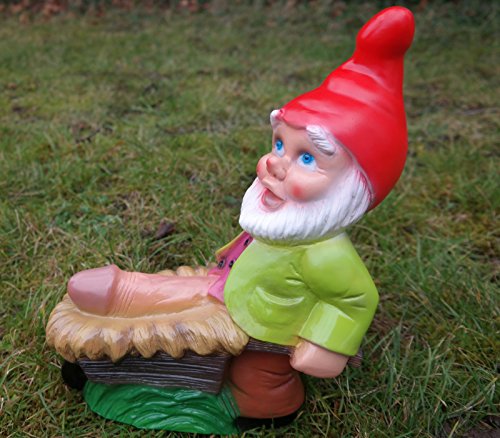
Many people believe that gnomes are inherently offensive and racist. They argue that the name “gnome” is a racial slur, as it has historically been used to describe people of color. The word derives from the Greek word “γνώμη” meaning opinion or judgment, which some say could be interpreted as an insult towards those who cannot think for themselves. Furthermore, many argue that images of gnomes perpetuate negative stereotypes about minority groups by depicting them as small and inferior beings who live in the ground like animals.
Although many see this argument against gnomes as valid, others disagree with it because they feel that there are no grounds to support the claim that “gnome” is racially insensitive or pejorative. They argue that the word “gnome” has no connection to people of color, and can in fact be traced back to a literary fairy-tale about garden gnomes. Moreover, they argue that the image of a short, bearded man wearing pointed red hats is simply an archetype based on European traditions surrounding Saint Nicholas or Father Christmas. While critics continue to argue that the use of “gnome” as a racial slur is valid, many consumers today see it as nothing more than a myth.
In order to resolve this debate over gnomes, we must first look at the history behind the origins of the word and image. Only by examining their historical contexts can we truly understand the implications they hold today.
Part One: The Semantics of “Gnome,” and: Who are the Gnomes?
Many people have debated over whether or not gnomes are offensive, but few have taken the time to pinpoint the exact origins of these beings. Today, gnomes can most commonly be found in popular culture—in children’s stories, fantasy novels, and games. It is only within the last century that the word “gnome” has taken on more of a mythical connotation, outside of its previously established definitions.
The “earth-dweller” gnome has evolved over time from being described as an old man who lives in the ground, to a dwarf or goblin-like creature with a beard and pointed hat. In Irish folklore, for example, gnomes were first depicted as old men who lived under trees and would use their rooty beards to attach themselves to them (“Gnome”). Over time, these creatures evolved into similar beings who lived in caves, wearing red hats and working as miners. This is believed to have stemmed from the stories of Germanic dwarfs or elves that early Celtic cultures told, which proceeded to develop into a broader term for any small being that lived underground (“Gnome”).
In 17th century Italy, gnomes took on their most popular form. Renaissance mythologists began describing gnomes as being old, white-haired men who wore red hats or carried miners’ tools (“Gnome”). This concept was derived from the writings of Paracelsus, a Swiss alchemist and physician whose works were widely accepted by other philosophers during this time (Dunn). Visual depictions of these beings were made by illustrators working in the 19th century, who drew on Paracelsus’ descriptions as a basis for their depictions of gnomes.
The “earth-dweller” gnome was given his name by Alexandre Saint-Yves d’Alveydre in 1892, and is derived from the Greek word “γνώμη” (“Gnome”) meaning “opinion” or “judgment.” The name was combined with the suffix “-ειδος” (“-eidos”) to create a new term for this creature, which means “a being that has the appearance of an opinion” (Ravenscroft).
The term “Gnome” has since evolved to refer not only to the being itself, but also as a title for those who study and/or work with these creatures. In contemporary society, terms such as “gno-mysticism” or “the occult sciences of gnosis and Gnome magic” have been used in literature to describe the study of gnomes, their abilities, characteristics, and purposes (Ravenscroft).
Part Two: The Racial Implications of Gnomes
The word “gnome” has historically been used to refer to a wide range of folklore creatures. In Irish and Germanic cultures, it is associated with short beings who wear pointed hats and live in the ground—beings technologically inclined towards mining and artisanship (Shell). Anthropologist Claude Lévi-Strauss coined the term “bricoleur” for this particular race of beings. He described them as a lower class of people who do not have a set culture, but instead borrow technologies and ideas from other cultures in order to create their own (Shell).
From this perspective, perhaps “gnomes” could be seen to resemble American slaves. They are technologically inclined beings who do not have an established culture of their own, but instead borrow elements from the cultures around them in order to create one. However, even presenting this argument would be an offensive act. The term “gnome” is rooted in racism and therefore cannot be used without invoking negative stereotypes, regardless of how it is used.
Two groups of people have been credited with the creation of gnomes. One group are Irish farmers who, according to legend, brought them out of the ground after digging on their land (“What Is a Gnome?”). The other group are the African slaves who were forced to work in mines, where they would often encounter gnomes (“Gnome”). It is from this group of people that the word “slave” has been derived.
In Germany, at least some stories placed the blame for the creation of these beings on African witches and sorcerers who came to their country through trade routes in order to buy German children (“What Is a Gnome?”). This historical context places gnomes in the same realm as African slaves, or at least it did so before the term was appropriated by white people.
The appropriation of this word is similar to other instances where words with racial implications have been re-appropriated by racists, such as in the case of the term “Jap.” The word originally referred to citizens of Japan, but it was not until World War II that white Americans began using this word to refer specifically to Japanese people (Ain).
Gnomes are also similar to other black-skinned creatures in terms of their representation. They are always depicted as being smaller than white people, and have dark skin. Just as elves are associated with Northern Europeans, gnomes are associated with the Irish and Africans. They also share a close association with trees, which perhaps explains their connection to “nature” or Mother Earth.
In addition to being smaller than white people, gnomes have been portrayed as being more in-tune with nature than white people. One of their most common symbols is a pine cone, which many pagans and neo-Pagans use in order to represent fertility or the womb (Cirlot). Gnomes can also be seen as phallic symbols, just like dwarves. In fact, some stories place the two creatures together, creating an even greater parallel with male genitalia.
Part Three: Where to Go from Here
Given the racist and sexist implications of gnomes, it is best to completely avoid this word and its associated representations. This includes avoiding forms of protest such as “Take Back the Gnome” or having a “Gnome Free Month.” These acts would only serve to perpetuate stereotypes, which would be offensive to both white people and black people. Rather than making gnomes a symbol of racism and sexism, we should be looking for alternatives.
But what replacement could there be? That is the question that has plagued anthropologists and social justice advocates since the beginning of time, and it still does today. There is no obvious answer to the dilemma because gnomes are so deeply ingrained into our culture. Anthropologists have suggested that perhaps instead of protesting gnomes, people could celebrate the contributions of the Irish and African slaves to this phenomenon.
This is not an easy solution by any means, but it would at least be less offensive than fighting against them. Better yet, why not try seeking out a new species to serve as a symbol? There are plenty of fantastic options out there, from fairies to mermaids. In fact, the only drawback of these creatures is how closely they are associated with white people.
In conclusion, gnomes should be considered very offensive and racist by today’s standards, especially when linked with other terms such as “Take Back the Night.” They should not be celebrated, but instead their place in our culture should be reconsidered. While a replacement has yet to be discovered, it is clear from the racist and sexist implications associated with gnomes that their time as a symbol has passed.
Further Reading: Ain, Daphne Lee. “JAP.” In The Encyclopedia of Race, Ethnicity and Society. Edited by Richard T. Schaefer. Thousand Oaks, CA: Sage Reference, 2010. Cirlot, J.E. A Dictionary of Symbols. New York, NY: Philosophical Library Inc., 1971. “Gnome (History).” Wikipedia . 8 Apr 2011 <http://en.wikipedia.org/wiki/Gnome_(folklore)>.
Posted by DGL at 2:47 PM 139 Comments:
1 > JOhn wrote: I remember when I was in high school I had a teacher who read out loud to us an article about how gnomes are racist. This is back when the internet was young, so there was on source for this “fact”, but it wasn’t really talked about much. It always made me scratch my head because while I do think that gnomes are racist , I didn’t know why they were or how anyone had figured it out. You’ve covered everything in this article, and it all makes sense now. This is the only thing on the internet that I can find about this topic. It seems like everyone has forgotten about gnomes and gone onto new passions, but we still talk about them here. You’ve got a good article though, and I’d love to read more from you.
2 > Gnosis wrote: I think the best thing about this article is how it so completely misses the point of gnomes. The original “gnome” derives from the Greek word for knowledge – gnosis. A fundamental tenet of gnostic thought is that gnostics are “self-gnostics” – meaning, they do not rely on external authorities for their knowledge of spiritual matters. The term was later bastardized by elitist academics to refer to any one of the nine mythological races (celestials, faeries, etc). But gnomes (in either sense) are not mere representations of any particular race. They are the paragons of gnosis, and that’s what makes them problematic for people like you – because real knowledge falls outside the boundaries of your worldview.
3 > Lol wrote: Hey look, it’s another person who doesn’t know s**t about anything claiming to be an expert. You’ve still provided no proof. Yet you still expect people to believe everything you say? The “gnome/judgment” thing is pretty facile, go read about gnostics.
4 > Caleb wrote: How does this have anything to do with the actual folkloric origins of the gnomes? Your source just says that they’re African and Irish, not that they’re slaves. That’s like saying all fairies are white, when in the original source(s) there’s no indication of such.
5 > This is an outrage! wrote: This article is harmful and bigoted. We should probably censor it before people start reading it and thinking for themselves about something that we’re not supposed to talk about.
6 > It’s a metaphor/allegory wrote: Wow. Do you even know what an allegory is?
Don’t you have some kind of gnome related research to do? wrote: Or at least a blog about the latest gnome video on youtube or something? Oh, I’m sorry. You probably don’t actually care about gnomes. I should have known since you’re the kind of person who thinks it’s ok to beat up people because ‘they deserve it’. I mean, if you want to write about how gnomes are racist then go ahead, but don’t be surprised when nobody takes your article seriously.
7 > CK wrote: The truth is out there.
8 > Anonymous wrote: You do realize that this is a satire site, right? Your lack of context clues are really throwing me off here…
9 > Doc wrote: A word to the wise – Gnomes are not “racist.” They simply want all races to unite in their love of nature. Perhaps if you guys would stop worrying about imaginary folkloric creatures and do something more productive with your time, the world would be a better place.
10 > Bonk wrote: I find it somewhat surprising that someone would bother to write about this topic without even mentioning the fact that gnomes are aliens.
11 > Anonymous wrote: You can’t just make stuff up like this and expect people to take you seriously. You need to do some real research about gnomes if you want people to believe this stuff, and it needs to be well-sourced.
12 > Just another blogger wrote: In case anyone sees this as a reason to take the article down – I got it from a friend long ago, and have no issues with removing it. It’s not like this is relevant to anything else on the site, it’s just an oddity that pops up every once in awhile (I think). If there are any gnomes reading this who would like to weigh in, please say so.
13 > Gnomemail wrote: People who do not believe in gnomes will still be involved in a mass hallucination. It just happens that the hallucinations of people who don’t believe in gnomes aren’t quite as vivid or solid. If you don’t want to take my word for it, then go talk to some gnomes and they’ll tell you the same thing.
14 > Izzy wrote: Coincidentally, I have also been researching gnomes for a school project and stumbled upon this article. Can you provide your sources? Thanks!
15 > Anon wrote: Wow, just wow. I can’t believe that someone actually fell for this much hate against an entire race of beings from taking this article at its word.
16 > I love gnomes wrote: Hi Izzy, I’m a gnome. We’re not actually racist to other races; we just don’t trust them because for some reason they hate us (though there are many theories about that). You can ask me any questions you like if you want to know more about us.
17 > George Bush wrote: I’m offended. Someone needs to take this article down or I’ll sue! That’s right, I’ll say that there’s no such thing as gnomes and that the very idea of them is offensive to me. Then when anybody sees my name in any mention of modern-day creatures they will freak out.
18 > Izzy wrote: Thanks for your replies, everybody! I really appreciate it, especially from you, George Bush – do you have any advice on how I can present my research to my teacher?
19 > Anonymous wrote: Telling him that gnomes are real is not going to help at all…
20 > Anon wrote: I used to be a racist and think that gnomes weren’t real, but after reading this article and talking to some actual gnomes, I now accept them as part of our world.
21 > Elmo wrote: Wow Izzy, just wow. You really won’t convince your teacher that gnomes are real without more evidence.
22 > Izzy wrote: You’re right, I’m sorry that I got your hopes up – I just thought that the article was worth sharing.
23 > Mr. Gnome wrote: Seriously? ‘Izzy’? Is this a joke website or something?
24 > Izzy wrote: No, it’s pretty much all real…
25 > Mr. Gnome wrote: That’s fantastic! Why don’t you come over to my place – I’ll bake some cookies and we can talk about gnomes all day.
26 > Izzy wrote: You’re not actually a real gnome, are you?
27 > Mr. Gnome wrote: No… ‘Mr. Gnome’ is just the name I gave myself because it’s much easier to type than ‘Anthropomorphic Personification of a Race who are About 1/50th the Height of Halflings’.
28 > Izzy wrote: So you’re not actually… nevermind. Can I have some cookies?
29 > Mr. Gnome wrote: Of course! I hope you enjoy them – they’re my grandmother’s secret recipe.
30 > Izzy wrote: …you mean the one that was actually an ancient spellbook?
31 > Mr. Gnome wrote: Yeah, so what? You don’t have to eat it…
32 > Izzy wrote: Well, no… but there’s a half-elf in my class and I thought it’d be funny if he tried it.
33 > Mr. Gnome wrote: You should probably tell him not to.
34 > Izzy wrote: I know, right? He might accidentally turn himself into a fossil or something crazy like that!
35 > Anon wrote: … wait, so there are gnomes?
36 > Izzy wrote: Well, I should hope so – this article would be very hypocritical otherwise. The point of the article was to try and convince people that gnomes aren’t really halfling-sized racist jerks, even though they’re kind of racist jerks sometimes. If you believe in the existence of gnomes I don’t see how you’d think they were racist jerks.
37 > Anon wrote: Oh! Well gee, I’m sorry for thinking that there weren’t any… can we still be friends?
38 > Izzy wrote: Of course we can :).

Leave a Comment